Who were those who came before us?
28 October 2026 · 6 min read
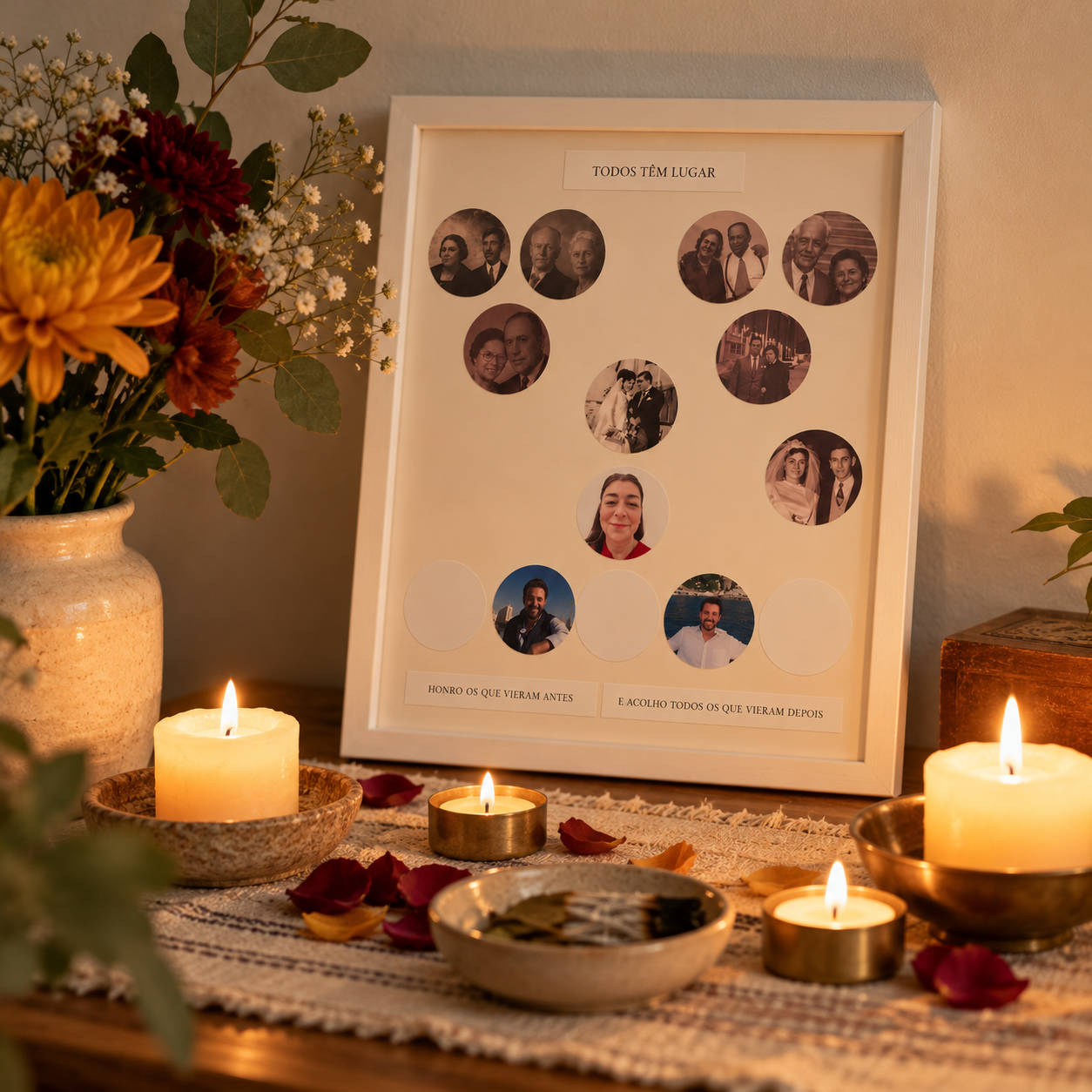
I had the rare good fortune of knowing two of my great-great-grandmothers. I remember them as "the little old grannies", always dressed in black. And I remember how confusing it was for me to work out who was whose mother. Even then, as a little girl, I used to think how wonderful it would be to live until I was very old. Today I understand that what fascinated me was not their age, but everything they had lived through.
At the time, I didn't realise the treasure I had in front of me. They were simply the little old grannies. Today I would give anything to ask them the questions I never asked.
Most of us know our parents and grandparents. Perhaps we have heard a few stories about our great-grandparents. But as we go further back through the generations, the names begin to fade and the stories are lost.
Why does it matter to know our ancestors?
Researching a family's history is much more than finding names and dates.
It is understanding where we come from.
When we start building a family tree, we often discover things we never knew.
A grandmother who raised her children alone. A great-grandfather who emigrated and never came back. A child who died and was never spoken of again. A marriage that brought together two families from different regions. A woman who had to give up a child because she had no means to raise it.
We also begin to understand the times they lived in.
What seems to us today like an incomprehensible choice may have been, back then, the only way to survive.
Understanding the context does not mean justifying everything that happened. It means looking at those lives with more compassion.
A family tree is much more than a list of names
When we draw a tree, we usually begin with our parents, grandparents and great-grandparents.
But we can go further.
We can try to find out where they were born, what they did for a living, whom they married, how many children they had, where they emigrated to and the circumstances in which they lived.
We can uncover photographs, letters, documents, records of birth, marriage and death.
And above all, we can talk to the older members of the family while we still have the chance.
Ask them what their parents were like. How the grandparents met. Who was the funniest person in the family. Who had a difficult temper. What traditions there were at home. What stories were told around the table.
Not everything that matters is written in the records.
Some memories disappear when the last person who held them dies.
The stories that repeat themselves
As we research, we may start to recognise patterns.
Families in which several generations emigrated. Women who raised their children without the fathers. Men who died very young. People who lost their homes and had to start again.
We also find professions passed down from generation to generation, shared talents, preserved traditions and similar ways of facing hardship.
Sometimes even the dates repeat. In my family, several people were born on the same day, in different generations. When I first noticed it, I sat looking at the tree for a very long time.
From a systemic perspective, observing these repetitions can help us reflect on the family models we learned and on the choices we make.
But it is important not to mistake a repetition for a destiny.
The fact that several women in a family lived through difficult relationships does not mean their descendants are condemned to live the same.
Knowing our history allows us to ask questions. It does not determine the answers.
And those no one talks about?
In almost every family there are stories that were never told.
People who were pushed away, relationships that were broken, children who died young, relatives who left and never returned.
In my family there was an uncle who spent his life in a care home. He was rarely spoken of, and almost always in a low voice. Today I wonder who he really was, and what story was left untold.
Sometimes the silence was born of shame. Sometimes of grief. And very often, simply of the passing of time.
Researching our genealogy can also be a way of bringing these people back from the absence of memory.
Giving them a name, a date, a place in the tree.
We don't need to agree with their choices or understand everything they did.
But we can acknowledge that they existed and that they are part of the family story.
Where to begin?
You don't need to hire a genealogist or have any special knowledge.
Start with what you know.
Write down the full names of your parents and grandparents. Add the dates and places of birth, marriage and death that you can confirm.
Then talk to your family.
Look for old photographs, certificates, letters and other documents that can help piece the story together.
National and regional archives, and church registers, are precious sources. Many records have already been digitised and can be searched online for free. FamilySearch, for example, gives free access to millions of records from all over the world. And if, like me, you have Portuguese roots, the site tombo.pt brings together the parish registers of the whole country, organised by district and parish.
And don't only look for the difficult events.
Discover the happy stories too. The marriages for love, the friendships, the celebrations, the small businesses, the achievements and the dreams.
Because a family is not made only of loss and suffering.
It is also made of life.
To remember is to give a place
At the beginning of November, many cultures turn towards their dead. In Portugal, where I come from, the Day of the Dead falls on the 2nd of November, but most families take advantage of the All Saints’ Day holiday, on the 1st, to visit the cemeteries with flowers and candles. In Mexico, on the Día de los Muertos, they build altars with photographs, marigolds and the favourite foods of those who have gone, because they believe that as long as someone is remembered, they never truly die.
Perhaps, this year, we can do more than light a candle for our dead.
We can look for an old photograph. Ask about someone we know little about. Write down the name of a great-grandfather. Finally begin that family tree we keep putting off.
We may never know every story.
But every name recovered is a person who is no longer just an unknown ancestor.
And every story discovered adds a piece to our understanding of who we are.
Because before we existed, there were many lives that made ours possible.
If you would like to look at your own story through your birth chart, that is what I do in my Ancestral Astrology readings.
Ana Vaz · ASTROMNEME - ANCESTRAL ASTROLOGY
Astrologer and family constellations facilitator. She brings together ancestral astrology and the systemic approach to help each person recognise what they have inherited and what is truly their own.